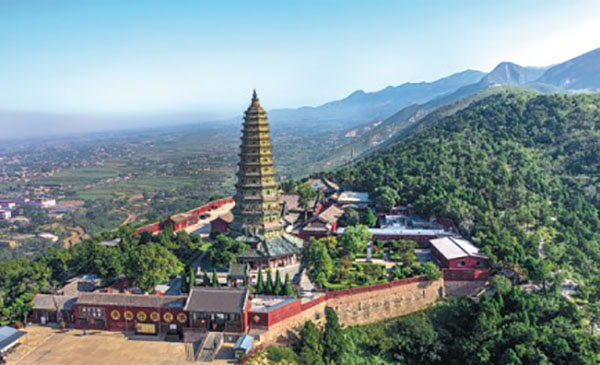
Feihong Pagoda
Introduction
Feihong Pagoda, also known as the "Flying Rainbow Pagoda", is a majestic 13-story octagonal tower located within Guangsheng Temple in Hongtong county, Linfen city, Shanxi province, China. Renowned for its vibrant glazed tiles and intricate motifs, the pagoda stands as a testament to the architectural ingenuity and cultural richness of the Ming Dynasty (1368–1644). Built in 1527, the pagoda is adorned with colorful depictions of Buddhist figures, animals, flowers, and jewels, with wind chimes hanging from the eaves of each tier. The structure's name, "Flying Rainbow", reflects its ability to cast rainbow-like reflections under sunlight, creating a visually stunning spectacle. Recognized in 2018 by the London-based World Record Certification as the "tallest multicolored glazed pagoda in the world", Feihong Pagoda is a significant cultural and historical landmark in China.
History
The history of Feihong Pagoda is deeply intertwined with that of Guangsheng Temple, a Buddhist temple complex that dates back over 1,800 years to the Eastern Han Dynasty (25–220). Originally constructed during this period, the temple has undergone numerous reconstructions due to wars and natural disasters. The pagoda itself was built during the Ming Dynasty in 1527, showcasing the architectural and artistic advancements of the era.
Feihong Pagoda has demonstrated remarkable resilience over the centuries, surviving two major earthquakes that measured above 8.0 on the Richter scale. Its robust construction and enduring beauty have made it a symbol of strength and cultural heritage. The pagoda's colorful glazed tiles and intricate designs reflect the artistic excellence of the Ming Dynasty, while its survival through natural and human challenges underscores its historical significance.
The pagoda is part of Guangsheng Temple's "three treasures," which also include the Zhaocheng's Collection of Buddhist sutras and Yuan Dynasty murals. These elements collectively highlight the temple's importance as a center of Buddhist art and culture in China.
Architecture
Feihong Pagoda is an architectural marvel, standing 47.31 meters tall and comprising 13 octagonal stories. Its pyramid-shaped design is both aesthetically pleasing and structurally sound, allowing it to withstand the test of time. The pagoda's multicolored glazed tiles are a defining feature, creating a vibrant and dynamic appearance that changes with the light. These tiles depict a variety of motifs, including Buddhist figures, animals, flowers, and jewels, showcasing the artistic diversity of the Ming Dynasty.
Each tier of the pagoda is adorned with wind chimes, which produce melodious sounds when swayed by the wind, adding a sensory dimension to its visual appeal. The intricate designs and craftsmanship of the pagoda reflect the advanced architectural techniques and artistic sensibilities of the Ming Dynasty.
The pagoda's octagonal shape is not only visually striking but also structurally advantageous, providing stability and balance. Its pyramid-like form ensures that the weight is evenly distributed, making it resistant to earthquakes and other natural disasters. The combination of aesthetic beauty and practical engineering makes Feihong Pagoda a masterpiece of ancient Chinese architecture.
Cultural Significance
Feihong Pagoda holds immense cultural significance as a symbol of Buddhist art and architecture. Its vibrant glazed tiles and intricate designs reflect the spiritual and artistic values of the Ming Dynasty, while its resilience through centuries of challenges underscores its importance as a cultural heritage site.
The pagoda is a focal point of Guangsheng Temple, which has been a center of Buddhist worship and art for over 1,800 years. The temple's "three treasures," including the pagoda, the Zhaocheng's Collection of Buddhist sutras, and Yuan Dynasty murals, collectively highlight its role as a repository of Buddhist culture and history.
Feihong Pagoda's recognition as the "tallest multicolored glazed pagoda in the world" further emphasizes its cultural and historical significance. It serves as a testament to the architectural and artistic achievements of ancient China, attracting visitors and scholars from around the world.








